











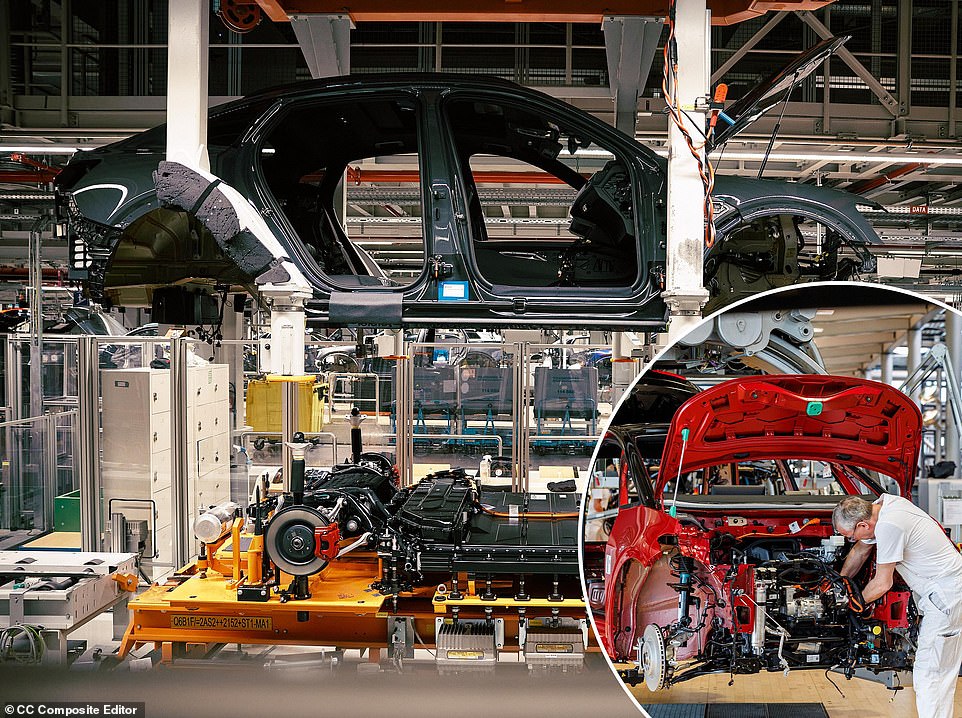



The German economy could be on track to shrink for a second consecutive quarter after struggles in the country’s all-important automotive sector saw industrial output slump in August. Fresh data from Germany’s federal statistics office shows industrial production fell by 4.3 per cent for the month, far worse than the 1 per cent contraction forecast by analysts.

It came as the automotive industry saw output plummet 18.5 per cent compared to the previous month, with officials pinning the blame on the combination of annual plant closures for holidays and production changeovers. Germany’s industrial sector, which contributes roughly 30 per cent of the country’s GDP, saw output fall 1.3 per cent from June to August when compared with the previous three-month period. This was also weaker than the 1 per cent decline forecast by analysts.

Carsten Brzeski, global head of macro at ING, questioned the German statistics office’s claim that the decline in automotive output was the result of public holidays and changes in production facilities. He said: ‘Even if there might be some one-off factors at play, we fear that the sharp drop in industrial production also heavily reflects the end of US frontloading.’ US buyers ramped-up imports from around the world earlier this year in efforts to avert the costs of trade tariffs brought.

This had helped export-led economies like Germany temporarily outperform expectations. Brzeski said: ‘The first months of the year finally saw the long-overdue turning of the inventory cycle in German industry. ‘However, it increasingly looks as if this upswing was almost entirely the result of the frontloading of US products in anticipation of looming tariffs.

‘Today’s drop in industrial production, falling new orders for the last four months, as well as inventories returning to the highest level since February, do not bode well for the coming months.’ It follows data showing German inflation rising well above the eurozone average at 2.4 per cent and contributes to concerns about the future of the economy.

German GDP shrank by 0.3 per cent in the second quarter of 2025, the second biggest drop of any EU country. The German Institute for Economic Research thinks the German economy will manage growth of just 0.2 per cent for the year. Brzeski added: ‘Hope remains that the fiscal stimulus, and particularly defence spending, could still feed through to industry over the coming months.

‘If not, the long to-do list of the German government will get even longer, with the next item being the need for traditional short-term stimulus – or at least a stabilisation package. ‘Available monthly data so far suggests that the risk of yet another quarter of contraction and thus an outright technical recession is very real.’
#German #recession #fears #industrial #output #flounders