













There is something reassuring about a contractor that keeps its head when the political weather turns blustery.
Galliford Try, a familiar name in UK infrastructure, has offered precisely that in its latest annual general meeting update, which points to trading that is ‘a little ahead of expectations’ as the new financial year beds in.
The group, which focuses on building and infrastructure work for public- and regulated-sector clients, is in the middle of the transition from the previous water investment cycle, known as AMP7, to AMP8.
These five-year regulatory periods, set by the water regulator, determine how much water companies can invest and therefore shape contractors’ workload.
The shift is creating a lull in the first half of the year but is expected to deliver a lift in the second, with management anticipating margin progress both at the halfway stage and for the full year.
Investors keeping an eye on capital allocation will note the steady progress of the share buyback launched in September.

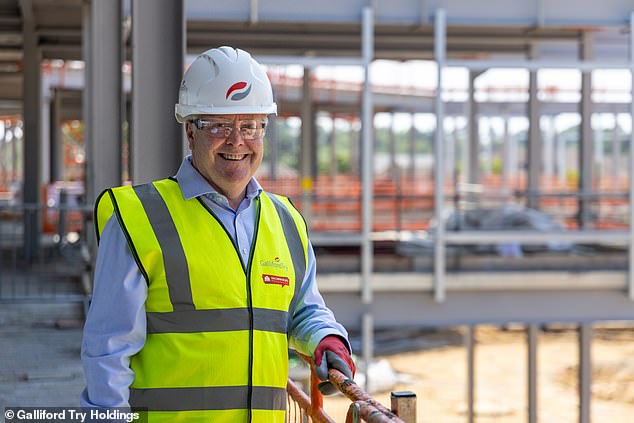
Galliford Try CEO Bill Hocking
By 10 November, the company had picked up 297,649 shares for £1.5million out of a planned £10million programme.
For a business with net cash on the balance sheet, measured after leases at £183.8million last year, this is a manageable outlay.
Where the group appears more firmly planted is in its order visibility. Although Galliford does not update the order book at the AGM, analysts highlight that more than 92 per cent of revenue expected for this year and more than 75% for next year is already secured.
The company was also named in October to a £3billion affordable-homes framework, adding another source of long-term work.
All eyes, though, are on Westminster. Management is ‘supportive of and encouraged by’ the government’s recently announced spending plans across its core sectors, including infrastructure and water, which are central to the group’s long-term growth strategy to 2030.
But it will only have a firmer view on performance once the Autumn Budget is out of the way. An update is due in January, by which point the fiscal picture should be clearer.
On the numbers, Panmure Liberum argues the shares remain inexpensive.
Galliford trades on 13 times forecast calendar-year 2026 earnings, dropping to under 12 times for 2027, with a dividend yield of more than 4 per cent.
Its closest peers, from Balfour Beatty to Costain and Morgan Sindall, sit in a similar valuation range, though the group’s strong net cash and revenue visibility offer some distinction.
For a sector often defined by thin margins and political risk, Galliford looks to be making steady headway.
The coming budget will set the tone, but for now, the company appears to have laid the groundwork for another year of gradual progress.
Recent inclusion in the FTSE 250 should raise the profile further among institutional investors looking for an antidote to the tech roller coaster ride, particularly as the pendulum swings towards UK and European value stocks, as appears to be the case currently.
For all the market’s breaking small- and mid-cap news go to www.proactiveinvestors.co.uk
DIY INVESTING PLATFORMS

AJ Bell
AJ Bell
Easy investing and ready-made portfolios
Hargreaves Lansdown
Hargreaves Lansdown
Free fund dealing and investment ideas

interactive investor
interactive investor
Flat-fee investing from £4.99 per month

Freetrade
Freetrade
Investing Isa now free on basic plan

Trading 212
Trading 212
Free share dealing and no account fee
Affiliate links: If you take out a product This is Money may earn a commission. These deals are chosen by our editorial team, as we think they are worth highlighting. This does not affect our editorial independence.
Compare the best investing account for you
#SMALL #CAP #IDEA #Galliford #eyes #water #infrastructure #affordable #homes #push