











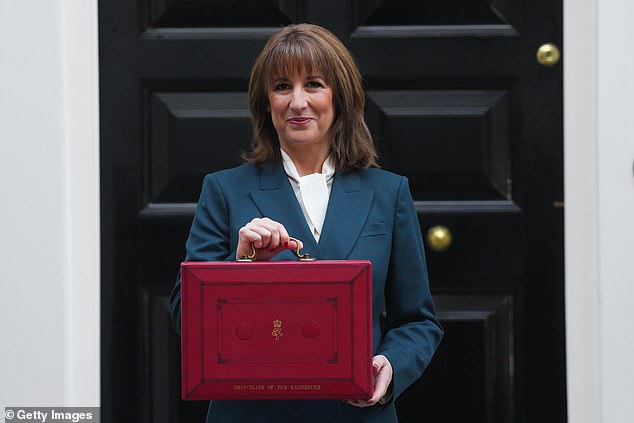


Rachel Reeves has taken a sledgehammer to millions of workers’ pensions today, in a swing that will wipe billions of pounds off retirement savings in Britain.
The Chancellor has launched a stealth attack on ‘salary sacrifice’ company pensions, with a new £2,000 annual cap on the pension contributions that can be made with tax breaks.
While it may elicit fewer cries of outrage than other measures announced in the Budget – such as the mansion tax or cut to the Cash Isa allowance, Labour’s sneaky tinkering of these little-understood pension tax rules will have disastrous consequences for future retirements, industry experts warn.
Middle class workers will be more than £37,000 poorer in retirement, alarming figures from stockbroker AJ Bell show.
From April 2029, money that employees had once earmarked for their pension will be handed over to the taxman. Workers will now be forced to face a choice between giving up take-home pay today or foregoing income in retirement.
Pension tax rules are notoriously complex at the best of times but constant fiddling from the Labour government have made them even trickier to navigate.
Here’s everything you need to know about what exactly is changing and how you can act today to safeguard your future retirement plans.

Rachel Reeves has taken a sledgehammer to millions of workers’ pensions today, in a swing that will wipe billions of pounds off retirement savings in Britain
What is changing?
Simply put, it will be more difficult for workers in the private sector to save into a pension in a tax-friendly way, as a result of the Budget.
This is because the maximum pension contribution you can make using a trick called ‘salary sacrifice’ without paying National Insurance has been capped at £2,000 per year. This means that anything above £2,000 will be treated as ordinary employee pension contributions in the tax system, and therefore subject to both employer and employee National Insurance.
Pension contributions will still be free of income tax so workers can continue to benefit from income tax relief up to the annual cap of £60,000.
Salary sacrifice is a scheme that companies can use to provide workplace benefits to their staff such as pension contributions, a company car or a bicycle for cycle-to-work schemes.
It is a tax-efficient way for employers and employees to make pension contributions because it reduces the amount of National Insurance they both pay. It is effectively an agreement for the employee to reduce their pre-tax wage by the sum they want to pay into their pension, which lowers their take-home pay and, as a result, their tax bill.
The true value in the scheme is that pension contributions made through salary sacrifice are not liable for National Insurance, which is usually 15 per cent for employers and 8 per cent for workers.
A lot of companies will share these savings with the employee by using some of the money saved to pay more into the worker’s pension.
Gary Smith, retirement specialist at wealth manager Evelyn Partners, says: ‘Restricting salary sacrifice is a tax penalty on people trying to do the right thing by saving efficiently for their own retirement and it’s yet another National Insurance cost increase imposed on firms, which may result in reduced pay and pension benefits for private sector employees.’
Who will be affected?
The new pensions cap will apply for private sector workers saving into workplace pensions via salary sacrifice.
Keir Starmer and Rachel Reeves will be unscathed by the blow as they benefit from generous gold-plated public sector pensions.
One in three private sector employees currently save into their pensions via salary sacrifice.
Anyone earning £40,000 or more who saves the minimum 5 per cent into their workplace pension via salary sacrifice will be hit by the new National Insurance charge on pension savings.
However, those on lower incomes could also be hit if they make larger contributions to their pensions.

Rachel Reeves seen delivering her Budget in the Commons today. She and Sir Keir Starmer will be unscathed by the pensions blow as they benefit from generous gold-plated public sector pensions
How much will it cost you?
The tax grab on private sector workers’ pensions will leave millions poorer in retirement – and in some cases the long-term cost could be catastrophic.
Someone aged 35 earning £40,000 a year could be £20,101 worse off at retirement age, according to calculations by AJ Bell. This assumes they have current pension savings of £30,000, annual investment growth of 5 per cent and that they contribute 5 per cent of their salary while their employer contributes 3 per cent.
Those earning £50,000 and using salary sacrifice would be £22,060 worse off by retirement age, AJ Bell has found.
Someone earning £100,000 a year would be a staggering £49,682 out of pocket.
This is because workers will face higher National Insurance bills year on year. An employee earning £40,000 would pay an extra £40 in National Insurance – resulting in a loss in take-home pay, while the employer would pay an extra £75. This rises to £60 for an employee earning £100,000 with their employer paying an additional £450.
Charlene Young, senior pensions expert at AJ Bell, says: ‘Many employees will see less in their pay packets and ultimately their pension pots too. Employers might even decide to close their salary sacrifice schemes completely as a result of such a policy. In those circumstances, the dent in the pension pots of employees could be even higher than predicted – not an ideal message for a government supposedly committed to improving pensions adequacy and boosting the long-term saving prospects of the nation.’
What you can do to protect yourself
An estimated 14.6million people are already saving too little for retirement, government figures show.
But there are fears that today’s stealth tax on pensions could discourage even more people from saving and to make matters worse, firms are likely to reduce their contributions to workers’ pots.
A survey of 2,050 people by trade body the Association of British Insurers (ABI) found 38 per cent of workers said they would save less into their pension if the plans came into effect.
But if you want to guarantee yourself a comfortable standard of living in retirement, it is crucial to take action to fight back against the Chancellor’s tax grab.
The new cap will come into effect in April 2029, which means you still have time to make use of the tax break. Consider increasing your pension contributions in the meantime to max out the savings you can make on National Insurance while you still can.
You can still pay into your pension in a tax efficient way – even once the change comes into effect. You can save up to 100 per cent of earnings – capped at £60,000 – into a pension and receive income tax relief. Consider increasing the amount you pay into your pension to make up for any losses you make to the new National Insurance tax bill.
If you receive a bonus this Christmas or in future, consider making a one-off payment into your pension to replace any lost savings and similarly, if you get a pay rise, you could ask your employer to increase the amount you contribute each year before you begin to notice the difference in income.
The salary sacrifice scheme is particularly important for workers whose earnings are on a tax ‘cliff edge’ as it can help them to move into a lower tax bracket. For example, those earning above £50,270 a year who have tipped into the 40 per cent higher income tax bracket. It also includes those earning £60,000 a year, who start to lose their child benefit entitlement.
One of the most costly tax cliff edges is at the £100,000 a year mark, at which point workers lose eligibility for free childcare hours and the tax-free childcare savings scheme, and start to lose their personal allowance (the £12,570 you can earn each year before paying income tax).
In this case, Ms Young says that workers may need to make new arrangements following the Budget and may face additional admin.
Pension contributions made outside of salary sacrifice can still be used to reduce your adjusted net income and get you below a crucial threshold, says Kate Smith, of pensions firm Aegon.
If your company puts an end to its salary sacrifice scheme, you will need to review your pension contributions and taxable income to make sure you are not caught out, Ms Smith says.
Ensure that you are still paying enough into your pension to keep you below any important thresholds. For example, make sure your taxable income stays below £60,000 if you want to remain eligible for child benefit. You can also pay more into a personal private pension (known as a Sipp, or self-invested personal pension) to duck back below a tax cliff edge.
While personal pension contributions can help, they often require filing a tax return and dealing with HMRC.
#Reeves #swung #huge #sledgehammer #thatll #wipe #pension #ways #strike #back..