










The Chancellor is reportedly eyeing plans to reduce energy costs in the upcoming Autumn Budget, as households struggle with rising prices.
Chief among her plans is to scrap the 5 per cent VAT charged on energy bills, even as Ofgem announces plans for low-standing-charge tariffs for all customers.
But there could be another way for Rachel Reeves to cut costs according to some industry insiders: by scrapping the energy price cap.
The cap, introduced by the regulator in 2019, was designed to protect customers who had defaulted onto a standard variable tariff (SVT) from price gouging by suppliers.
Tomorrow, the price cap rises from £1,720 to £1,755 ahead of winter, when energy usage is up.
Ditching the price cap might seem counterintuitive, particularly because it has evolved into an essential part of households’ budget planning, but experts say it has not done its job.

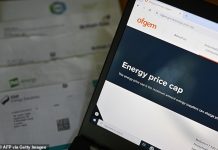
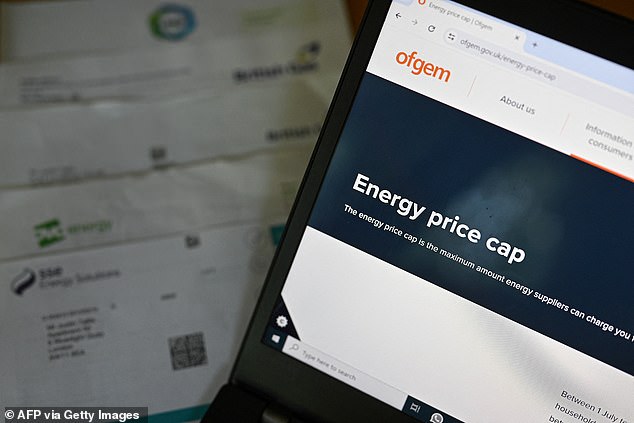
Time to ditch the cap: Some experts are calling on Ofgem to remove the energy price cap
The main concern is that it has created apathy among households, with plenty missing out on competitive fixed tariffs and instead relying on the price cap, while vulnerable people miss out on targeted support.
And as the UK moves to greener energy, the price cap could soon prove redundant as households move to fixed tariffs for their EVs and solar panels.
So, has it worked for consumers and could it be time to say goodbye to the price cap?
How is the price cap calculated?
Ofgem sets the price cap using the maximum unit costs and standing charges suppliers can charge their customers. It is based on average prices during the three-month observation window and other related costs.
It was initially set every six months, but when the cost of energy started to fluctuate more frequently, suppliers came under strain and could not commit to buying energy at the price at which they had to retail it.
Keeping prices held for longer against the backdrop of exploding prices helped to contribute to the collapse of smaller suppliers, so the regulator changed it to every quarter.
Gareth Kloet of Gocompare says it allows prices to ‘flex with whatever is the predominant wholesale cost of energy’ and has helped to protect customers from being overcharged.
However, a price cap that changes every three months, combined with competitive fixed deals returning to the market, has made it a complicated beast for suppliers and households.
And, with the influx of competitive fixed deals, it’s clear that customers are paying more for their energy than they should be.
The way the price cap is calculated is ‘complex and arduous’, says Neal Slater, head of trading at supplier So Energy.
‘It involves having to price in an additional risk premium, and means we reach a situation where some suppliers are offering up to £200 off the price cap.’
Suppliers have certainty with the amount of energy they need to buy and for how many customers, which means they’re better able to hedge the energy with increased certainty.
With variable tariffs, the number of customers and usage changes, which means suppliers may have to buy more energy in the observation window, pushing the average cost up.
Volatility in wholesale markets also makes the concept of a cap on energy prices almost impossible.
Critics say that when the price cap should have worked, like in the 2022 energy crisis, the Government had to provide additional support.
Richard Neudegg, director of regulation at Uswitch says: ‘The price cap itself would have been reviewed and it would have been at an unthinkable level for consumers.
‘So at a time when protection was needed, the price cap didn’t actually protect customers.’
Does the price cap protect customers?
The universality of the price cap is its appeal but also its biggest weakness, critics say.
‘There are some really vulnerable households which need a really deep level of protection,’ says Neudegg.
‘We would question where it’s giving protection at all, but if we assume it is, it’s giving thin protection to a large number of people.
‘It’s inch deep, mile wide, whereas it’s more important to go inch wide, mile deep and give a lot of help to people who really need it. Everybody else could just get a fixed deal.’
No one benefits from the price cap… Everyone seems to be losing out
Neal Slater, head of trading at So Energy
Slater agrees, saying ‘no one benefits’ from the price cap because ‘it doesn’t do what it says on the tin.
Everyone seems to be losing out in one degree or another.’
Instead, some suppliers are calling for a social tariff to help those suffering from fuel poverty.
Richard Hughes, director of retail at EDF said: ‘An SVT is like a social tariff, it’s just not a very well-targeted one.
‘We’d pick defined criteria similar to what the Government does on benefits; that’s where the government has already drawn lines.’
The price cap forces suppliers to conform to a particular hedging strategy, which means that it’s difficult to innovate and find cheaper ways to offer energy to customers on variable tariffs.
When the wholesale price increases, so too does the price cap.
There is also growing concern that the price cap has changed the way consumers behave, and that while a third of households are now on a fixed tariff, too few are shopping around.
Kloet says that this is partly because the energy market hasn’t returned to its pre-crisis state.
‘That’s primarily down to customers thinking if the cost of energy goes up or down, they’re okay because they’re on the price cap,’ he says.
‘The cap has definitely left an inertia in the market, with some customers thinking, ‘Is it really worth the hassle of switching?’
Slater adds: ‘For some people, [a fixed deal] might only be a £200 a year saving, so they just don’t bother.
‘You’ve got fewer people taking advantage of innovative tariffs because the price cap is seen as a safety net, and they don’t necessarily bother to go off the SVT.’
Added to that, the frequency of price cap changes makes it difficult for customers, and even expert forecasters, to predict where their energy bill might be in a few months, and they are cautious to fix.
‘Consumers are biased to upside risk,’ says Neudegg. ‘We’re more likely to worry about losing a bit if you fix as the price cap goes down, but that fails to acknowledge the bigger risk. What if it goes up?
‘That’s going to hit us much more than if it goes down. And even if it goes down, it would have to do so by around £200 to lose out.’
An Ofgem spokesman said: ‘The price cap was always designed to be a back stop so consumers are not paying more than they should for the energy they use, there are better deals out there that can help save people money.
‘We continue to keep under review how consumers are best protected in a changing market where energy will be used more flexibly in the future.’
How likely is a price cap reform?
There is a strong appetite for reform from customers and some smaller suppliers, but most crucially, from Ofgem, which has launched various consultations on the price cap.
The recently announced plans to force suppliers to offer at least one low-standing charge tariff suggest Ofgem will need to create another price cap.
It could be a good opportunity for the regulator to move away from the existing mechanism, but ultimately, it will come down to politics.
‘It’s probably very politically difficult to remove it entirely because of its name,’ says Neudegg. ‘It’s got to at least be reformed and there’s going to have to be something different in the longer term.’
As the Government pushes more households to use green energy, more innovative tariffs for solar panels, heat pumps and EVs will need to come to market.
But if the price cap remains in its current form, or at all, it could prove counterintuitive.
‘There are innovative tariffs designed for solar panels, heat pumps and EVs. There’ll be more coming,’ says Slater.
‘But people aren’t going to necessarily adopt them if they’ve got this artificial shield that isn’t necessarily doing what they think it’s doing.
The way households consume energy is likely to change in the next few years, too, says Neudegg.
‘We’re going to move to a market where it really matters when people are consuming energy.
‘In that, the price cap doesn’t really work for where things are going.’
Currently, variable tariffs bunch around the price cap, so if it were removed, Slater says most customers would move onto a fixed contract and save money.
The energy market is in a transitional phase. As people adapt their habits, there might be increased uptake of fixed and green tariffs, particularly if suppliers are able to show significant savings. With that, the price cap could become redundant on its own.
However, it will only be serious pressure from consumers and politicians that creates meaningful reform.
For now, politicians are unlikely to want to remove the price cap, but if bills reach unaffordable levels, it could soon become a problem they can’t ignore.
SAVE MONEY, MAKE MONEY

Sipp cashback
Sipp cashback
£200 when you deposit or transfer £15,000

4.51% cash Isa
4.51% cash Isa
Trading 212: 0.66% fixed 12-month bonus

£20 off motoring
£20 off motoring
This is Money Motoring Club voucher

Up to £100 free share
Up to £100 free share
Get a free share worth £10 to £100

No fees on 30 funds
No fees on 30 funds
Potentially zero-fee investing in an Isa or Sipp
Affiliate links: If you take out a product This is Money may earn a commission. These deals are chosen by our editorial team, as we think they are worth highlighting. This does not affect our editorial independence. Terms and conditions apply on all offers.
#Energy #price #cap #SCRAPPED #bring #bills #industry #experts