












No-one wants to have a difficult conversation with their relatives, but it seems many of us are regularly being put between a rock and a hard place when it comes to one specific topic.
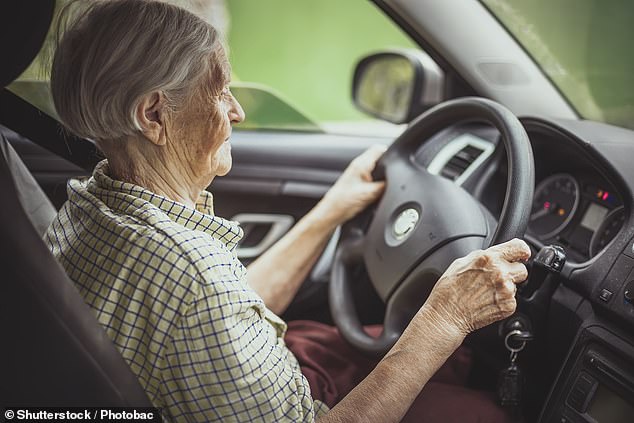
Nearly half of Britons have had to find the courage to speak up when it comes to an older relative’s standard of driving, with 46 per cent of people having to tell senior family members that it’s time to give up their licence on safety grounds.
The research, conducted by leading road safety charity IAM RoadSmart, also found that a third of people admit they feel unsafe travelling in a car with that relative.
The report says the findings of the poll highlight the need to review the system for licence renewals and give older drivers and their families more support.
Currently, people in the UK must renew their driving licence from the age of 70 every three years.
The system relies on self-declaration that the driver meets the required eyesight standards for driving, and a disclosure of any medical condition that might affect driving.
However, one facet of Labour’s overdue Road Safety Strategy is to impose eye tests for elderly motorists each time the renew their driving licence, which is a legal requirement every three years once they turn 70.

Nearly half of Britons have had to find the courage to speak up when it comes to an older relative’s driving
While the system awaits reform, tough conversations are taking place up and down the UK.
They might not be talks people want to have, but they come from a good place as 50 per cent said they broached the conversation with their loved one’s best interests at heart.
In particular they wanted to ensure their older relative’s safety, while one in three were compelled to speak up after noticing their reactions or judgement whilst driving seemed slower than before.
Warning signs that would prompt loved ones to speak out include near misses or minor collisions (62 per cent), difficulty seeing road signs or markings (61 per cent), and driving either too slowly or too fast (53 per cent).
Positively though, almost half were relieved once the conversation had been had.
Often it’s the case that people are speaking up for the sake of others. One in ten said they felt compelled to say something when the older person’s driving became a concern as they are responsible for ferrying grandchildren around.
And a fifth said they were forced to say something as they seemed to be getting lost on familiar routes.

IAM RoadSmart found that 85% support compulsory eye-testing for those over 70 when they renew their licence every three years
It doesn’t come without its challenges though, with barriers to instigating the conversation included worrying about how the other person might react (38 per cent), feeling awkward and not knowing how to go about it (29 per cent), and worrying that it might cause an argument (23 per cent).
Not everyone is speaking up, though, with the risk that there are more drivers on the road that could pose a danger to others than there should be.
It’s understandable, with a quarter of those that had not yet broached the subject saying they have avoided the conversation altogether as they wouldn’t want to risk upsetting or offending the older relative (25 per cent), while one in ten think their concerns would go unheeded anyway.
What can be done to make sure older motorists are safe to drive?
Getting help having such conversation would be a start.
Nearly four in ten said they would feel more comfortable having the chat if they were armed with evidence of unsafe driving.
Almost a third would prefer a professional to lead the conversation, and close to a quarter would welcome a review by a driving instructor.
Additional research by IAM RoadSmart found that 85 per cent support compulsory eye-testing for those over 70 when they renew their licence every three years, and more than half support a requirement to pass a theory and practical test to continue driving at the age of 70.
The number of drivers involved in collisions increases for the over 70s, before rising sharply to the highest rate for drivers 85 and over.
IAM RoadSmart director of policy and standards Nicholas Lyes said: ‘The Government’s updated road safety strategy must ensure independence and safety are balanced equally.
‘Moves to strengthen eyesight requirements would be welcome but this should go together with funding to help people undertake voluntary mature driver courses.
‘By doing so, it will support older people to improve their skills and confidence on the road, promoting safe independence for over 70s.’

Labour is considering introducing mandatory eye tests for drivers over 70 years old
Are eye tests for over 70s coming?
Currently, the UK is one of only three European countries to rely on self-reporting of visual conditions that affect a person’s ability to drive.
But this could change soon as Labour is reconsidering this process of self-reporting after groups including the Association of Optometrists have campaigned for legislative changes requiring all motorists to undergo vision screening upon initial licence application, during renewals, and through triennial assessments for those aged over seventy.
Department for Transport (DfT) statistics show 252 people were hurt in road collisions where below-par eyesight was reported in 2023 – the highest number since 2017 when 262 were injured.
Among the 252 instances were six deaths – two more than in 2017 – of which three were pedestrians.
Last month Simon Lightwood, the Parliamentary Under-Secretary of State for Local Transport, said: ‘The Government is considering the current process of self-declaration and the challenges posed by an ageing population where certain conditions, including vision conditions, may become more prevalent.’
#Britons #difficult #chat #elderly #relatives #topic..