













Today’s jobs figures make troubling reading.
Unemployment soared to 5 per cent in the three months to September, a high not seen since early 2021, and redundancies are on the rise.
Wage growth is also the lowest seen since April 2022 at 4.6 per cent, a figure that was boosted by bumper public sector pay deals.
Higher inflation is increasing businesses’ bills and borrowing costs, while the keenness to adopt artificial intelligence has also contributed to job losses.
But Kate Underwood, managing director of human resources company Kate Underwood HR and Training, says the real culprit is Chancellor Rachel Reeves’ last Budget in 2024.
In it, the Chancellor put up the minimum wage and hiked the amount employers contribute in national insurance on their staff’s wages.
Below, the jobs expert explains why this worrying unemployment spike can be traced back to Labour’s last round of monetary policy changes – and what could be coming in the next Budget on 26 November.

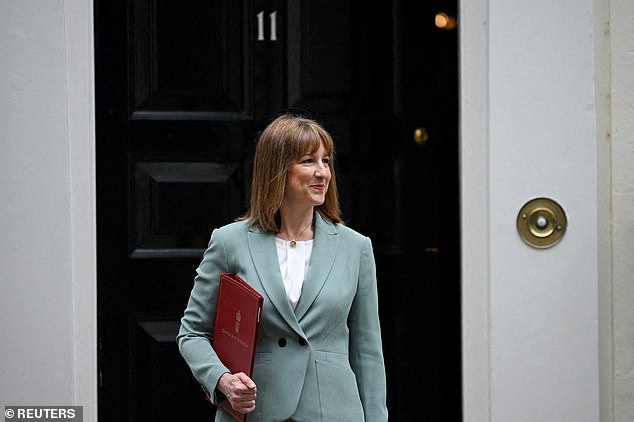
Impact: Rachel Reeves’ last Budget in 2024 introduced policies which have led employers to cut jobs – what will happen this time?
Unemployment is up yet again and we should all be troubled by the data.
The latest Office for National Statistics figures put the rate at 5 per cent between July and September 2025 – the highest since 2021. It’s rising quarter by quarter, higher than a year ago, and a sign that the jobs market is slowing fast.
The figures are deeply worrying. Payrolled employees fell by 117,000 between September 2024 and September 2025, and dropped 32,000 between August and September this year.
Vacancies inched up by 2,000 to 723,000 in August to October 2025. So the openings are there – but fewer people are actually in work. That’s not stability, that’s stagnation.
This isn’t a one-off wobble. It’s the sound of the economy hitting the brakes. When jobs go but vacancies don’t rise, it means businesses aren’t confident.
They’re freezing recruitment, quietly cutting hours, and holding off on replacements. It’s the kind of creep of a slowdown that doesn’t make front pages – but you feel it when your hours get cut, when overtime dries up, or when your friend suddenly loses their job.
It all traces back to Rachel Reeves’ first Budget in 2024. The rises in minimum wage and employer National Insurance contributions announced then landed in April 2025, just as businesses were still reeling from inflation, sky-high energy bills and expensive borrowing.
It shows just how out of touch Reeves and Labour are and how they do not understand how the economy works.
Job insecurity is everywhere
It does not take a genius to work out that raising the amount of National Insurance employers have to pay would lead to unemployment going up.
And who knows what she is going to do at the Autumn Budget in just two weeks – we could be looking at the data in six months time being even worse.
On paper, unemployment is 5 per cent. In real life, insecurity is everywhere. For small firms, it’s been rough. They’ve hit pause on hiring.
People aren’t bad with money – they’re running out of it
Underemployment, people who can’t get enough hours, is rising. So is the number of people juggling multiple part-time jobs to make ends meet.
Gig workers and freelancers are living week to week, never sure what they’ll earn. Technically they’re ‘in work’. But in reality, they’re on a knife-edge.
And for those who still have jobs, the squeeze hasn’t gone away. Inflation might have cooled, but the prices never came down. Rent, food, energy, transport – it’s all still sky-high. Real wages, what’s left after inflation, have barely moved in two years.
Public sector staff have seen pay packets eroded again, despite the government’s headline pay rises. Private firms aren’t much better, cutting overtime and quietly freezing recruitment.
And yet every time unemployment ticks up, the same tone-deaf advice is rolled out to tighten your belts and save more money.
People aren’t bad with money – they’re running out of it.
Sure, if you’ve got any wriggle room, do what you can. Keep a bit aside in an easy-access account.
If your income dips, talk to your lender early. Check for forgotten insurance or workplace cover. Cut what you don’t need such as your extra streaming services, the gym you never use.
But let’s be honest, these are small fixes in a big mess. Because this isn’t just about budgeting. It’s about a broken system.
Work used to mean security, now it means survival.
At the top end, professional and tech jobs are thinning out as AI and automation reshape whole industries. At the bottom, sectors like care, hospitality and retail are desperate for staff, but pay so little and offer so few hours that people can’t live on them.
Telling people to ‘upskill’ or ‘be prudent’ doesn’t cut it. We need fairer pay and stable contracts for workers.
And enough finger-wagging. Britain doesn’t need another lecture about budgeting. It needs an economy that works for the people doing the work.
SAVE MONEY, MAKE MONEY

Sipp cashback
Sipp cashback
£200 when you deposit or transfer £15,000

4.56% cash Isa
4.56% cash Isa
Trading 212: 0.71% fixed 12-month bonus

£20 off motoring
£20 off motoring
This is Money Motoring Club voucher

Free shares bundle
Free shares bundle
Get free UK shares worth up to £200

4.45% Isa with bonus
4.45% Isa with bonus
Now with no penalty for withdrawals
Affiliate links: If you take out a product This is Money may earn a commission. These deals are chosen by our editorial team, as we think they are worth highlighting. This does not affect our editorial independence. Terms and conditions apply on all offers.
#Rachel #Reeves #Budget #blame #deeply #worrying #unemployment #spike #jobs #expert